manifestation 101
Joe Dispenza Meditation vs 3-Minute Future-Self Audio
Joe Dispenza meditation and future-self audio both rehearse a new self, but they ask for different time, structure, and body attention.
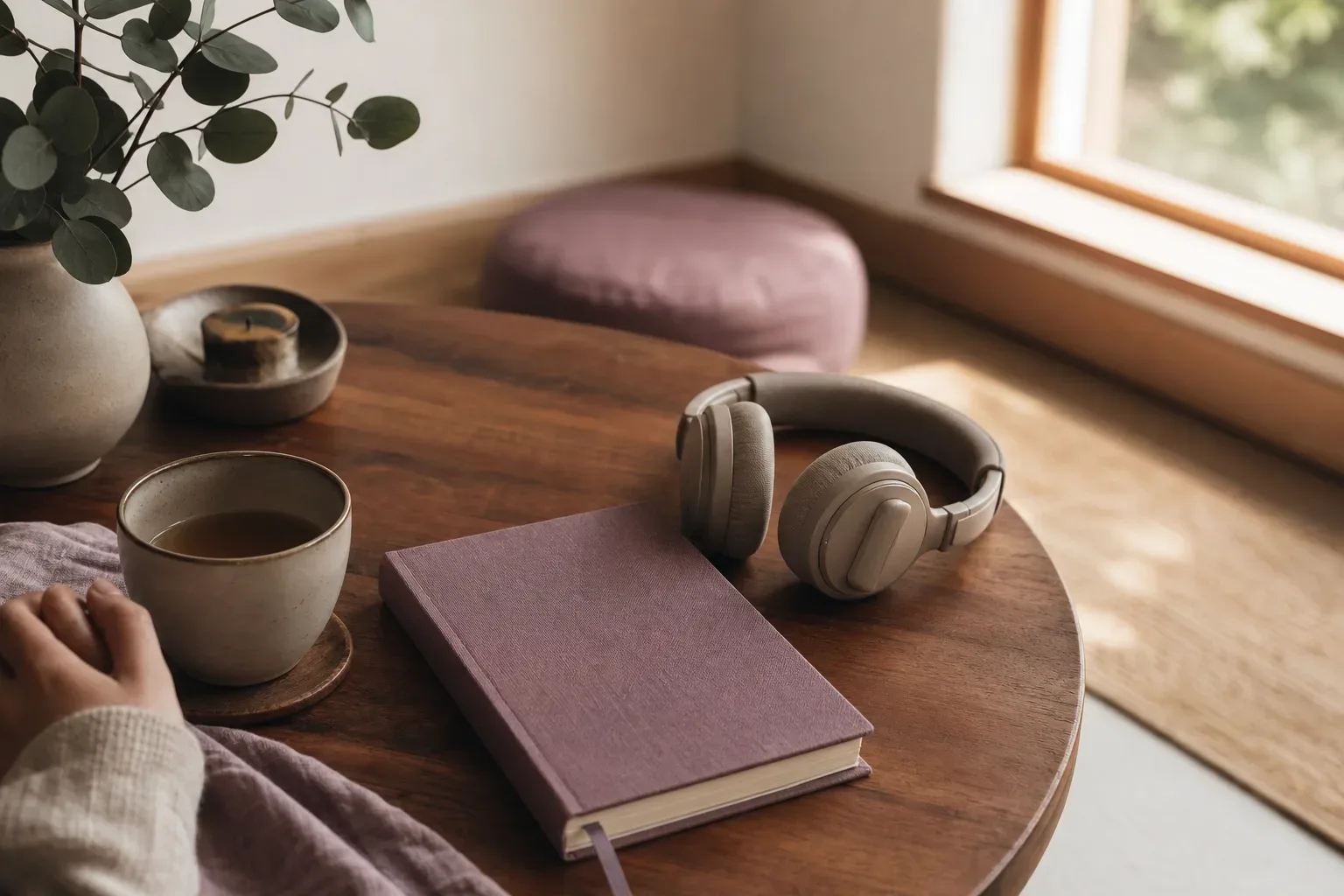
The headphones are on the table. The cushion is still in the corner. Joe Dispenza meditation and a 3-minute future-self audio both ask you to rehearse who you’re becoming, but they do it differently: one is a longer guided state practice; the other is a short daily audio cue you can repeat.
What is Joe Dispenza meditation really asking you to do?
Joe Dispenza meditation asks you to enter a focused state, loosen your usual identity, and rehearse a new one with the body involved.
Dispenza’s work is often built around long guided meditations, breath, attention to the body, and emotional rehearsal. Many recordings run 30, 45, or 60 minutes, and some retreat practices are longer. His books, including Breaking the Habit of Being Yourself from 2012, connect thought, feeling, and repeated identity patterns. The central idea is simple enough to hold in one hand: stop practicing the old self, and begin practicing the new self before outer facts have caught up.
That idea has some support in adjacent science, even when specific claims should be held carefully. Mental rehearsal has been studied in sports psychology for decades. A 1994 meta-analysis by Driskell, Copper, and Moran reviewed 35 studies and found that mental practice had a positive effect on performance, especially when paired with physical practice. Meditation research also suggests state changes are real. A 2014 review in JAMA Internal Medicine looked at 47 trials and found moderate evidence that mindfulness meditation can improve anxiety, depression, and pain.
Still, Joe Dispenza meditation is not small. It asks for time. It asks for tolerance of intensity. It often asks you to sit with sensation before you have a clean story for it. That can be beautiful for some people. It can be too much for others.
A practice can be true and still be too large for the morning you actually have.
If you’re comparing it with a short future-self audio, the first question is not which one sounds more impressive. The question is which one your real nervous system will let you repeat. In the Manifestation pillar, the quiet center is not drama. It’s repeated attention, chosen again.
What is a 3-minute future-self audio doing differently?
A 3-minute future-self audio works by making identity rehearsal short, personal, and easy to repeat daily.
The AYA version is specific. The AYA Method is a daily audio manifestation practice. Each day you listen to a short personalized recording — your Dream-Self Moment — narrated from the version of you who has already manifested the life you intend. Listening is the practice. Repetition is the work. The audio is the method.
This matters because the practice is not asking you to generate the whole state by yourself. You press play. You hear a voice speaking from the life you’re learning to recognize. You do not have to find perfect language at 7:12 in the morning. You do not have to sustain focus for 45 minutes. The structure holds the sentence while your body learns whether it can believe it.
Short practices have their own evidence base. BJ Fogg’s work at Stanford, later published in Tiny Habits in 2019, emphasizes that small behaviors repeated in stable contexts are more likely to become durable. A large 2009 study by Lally and colleagues in the European Journal of Social Psychology found habit formation took a median of 66 days, with wide variation from 18 to 254 days. The lesson is not that 66 is magic. The lesson is that repetition has a body.
Future-self audio also changes the entry point. Joe Dispenza meditation often begins with moving attention away from the ordinary self. Future-self audio begins with recognition. You hear the self named as already familiar. You listen until the possible stops feeling theatrical and starts feeling like a room you know.
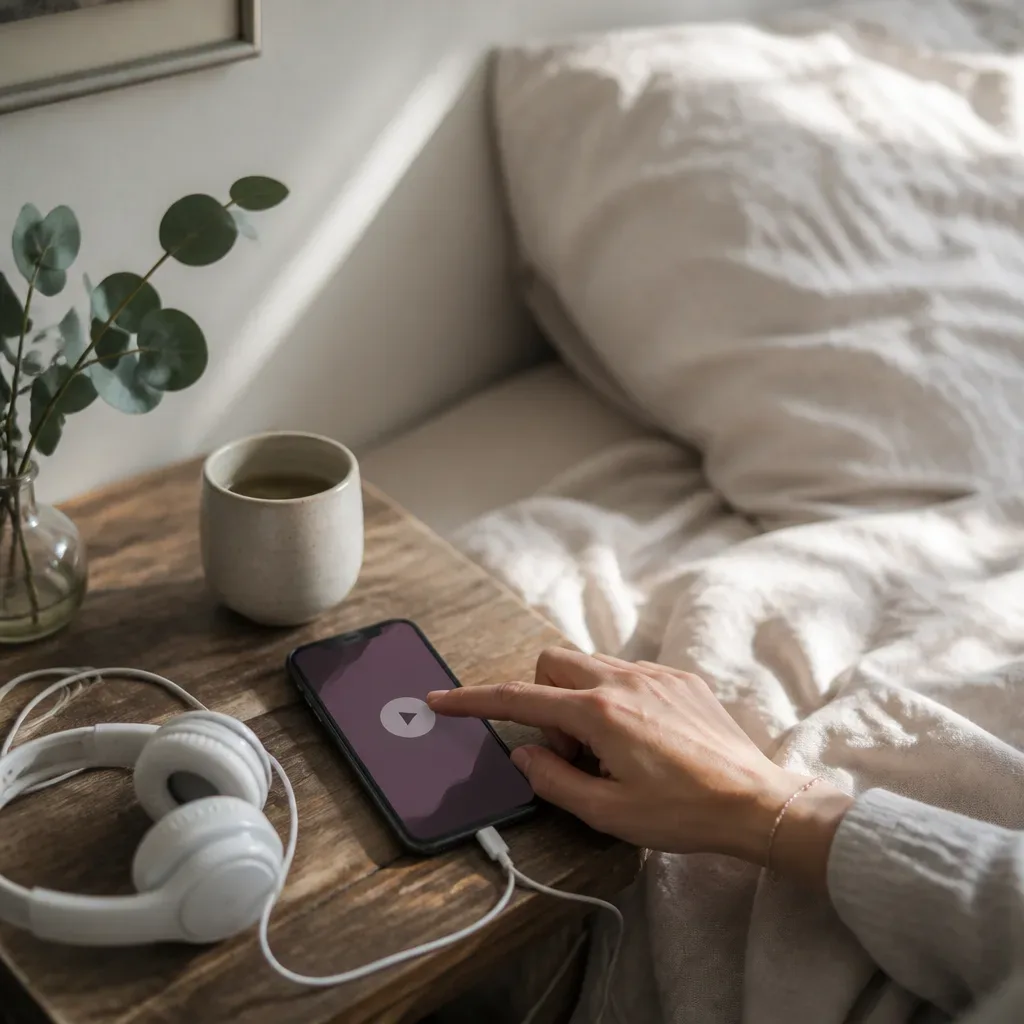
The app also includes a daily affirmation and a Manifestation Board, but those are complements. They can help you see or phrase the practice. They are not the center. The audio is the center because listening lowers the starting weight. For many people, that is the difference between a practice they admire and a practice they actually do.
Which practice fits your nervous system and schedule?
The better fit is the one that matches your available time, attention span, and capacity for inner intensity.
A comparison can help. Not to rank the practices like machines. To see the conditions each one prefers.
| Question | Joe Dispenza meditation | 3-minute future-self audio |
|---|---|---|
| Usual time needed | Often 30 to 60 minutes | About 3 minutes |
| Main action | Sit, focus, breathe, rehearse | Listen to a personalized Dream-Self Moment |
| Effort level | Medium to high | Low to medium |
| Best use | Longer reset, retreats, spacious mornings | Daily repetition, busy days, identity cue |
| Risk of skipping | Higher when time is scarce | Lower because the entry is small |
| Needs privacy | Usually yes | Helpful, but not always necessary |
Time is not shallow. Time is one of the main reasons people stop practicing. Pew Research reported in 2023 that 60% of U.S. adults say they sometimes feel too busy to enjoy life, and that pressure shows up in the private rooms where practices are supposed to happen. If a method needs an hour, it may become attached to guilt.
The nervous system piece is just as important. Some people love extended stillness. Some people begin to feel trapped after 8 minutes. Trauma-sensitive mindfulness teachers, including David Treleaven, have written about how eyes-closed attention and strong internal focus can be difficult for people with trauma histories. This does not make meditation wrong. It means dosage matters.
A 3-minute audio can be gentler because it gives you an outside thread to follow. You can keep your eyes open. You can sit on the edge of the bed. You can listen while your tea cools. The practice does not require a ceremonial version of you.
Use this simple filter:
- If you have 45 quiet minutes and want a full state practice, choose the longer meditation.
- If you have 3 minutes and need to remember who you are becoming, choose the audio.
- If you’re activated, tired, or scattered, choose the practice that helps you stay here.
- If you keep skipping, reduce the size before you question your sincerity.
The best practice is not the one with the largest promise. It is the one that can survive an ordinary Tuesday.
What does the research say about long meditation versus short audio cues?
Research supports pieces of both approaches, while the strongest claim belongs to repetition, attention, and emotional salience.
Longer meditation has been studied more directly than personalized future-self audio. Mindfulness-based programs often run 8 weeks, as in Mindfulness-Based Stress Reduction, created by Jon Kabat-Zinn in 1979. Many clinical trials use sessions of 20 to 45 minutes, plus home practice. A 2018 review in Clinical Psychology Review found mindfulness-based interventions can reduce symptoms of anxiety and depression, with effects varying by population and study quality.
Future-self audio sits closer to mental imagery, self-affirmation, narrative identity, and habit cueing. Self-affirmation theory, first described by Claude Steele in 1988, suggests that reflecting on valued aspects of the self can reduce defensiveness and support adaptive behavior. A 2015 paper in Social Cognitive and Affective Neuroscience found that self-affirmation activated brain regions linked with self-related processing and valuation, especially when future orientation was involved.
There is also research on prospective thinking. Studies by Hal Hershfield and colleagues have shown that feeling connected to your future self is associated with better long-term choices, including financial saving. One 2011 paper in Judgment and Decision Making found that people who felt closer to their future selves tended to make more patient decisions. Future-self audio uses that same bridge, but makes it audible.
None of this proves that any single recording changes a life by itself. A recording is not a substitute for sleep, therapy, medical care, skill, or action. It is a repetition device. It gives attention a place to return.
That is why Affirmations pillar practices can help, but only when the words are believable enough to stay with. A sentence that is too far from the body becomes decoration. A sentence that is close enough becomes a handle.
How do you choose without making one practice wrong?
You choose by naming the job you need the practice to do today.
Some days need depth. Some days need contact. Joe Dispenza meditation may be right when you want to sit for a longer period, soften old emotional loops, and enter a more immersive rehearsal. A future-self audio may be right when you need a clean cue before the day begins, between meetings, or after you’ve forgotten yourself in other people’s needs.
I learned this in clay before I learned it in practice. A vessel can collapse because the wall is too thin. It can also collapse because the hand asks too much, too soon. The same is true inside. More pressure does not always make more form.
Specificity helps. Before you choose, ask:
- Do I need regulation or remembrance?
- Do I have 3 minutes or 45?
- Am I steady enough for silence?
- Do I need guidance in my own words?
- Will this practice make tomorrow easier to begin?
A 2020 review in Health Psychology Review noted that self-regulation improves when goals are paired with cues, planning, and feedback. This is why a short daily audio can be useful. It becomes a cue. Same time. Same voice. Same return. The brain likes repetition more than it likes speeches about change.
There is also a spiritual temperament question. Some people are drawn to astrology, timing, and symbolic reflection. If that is you, Astrology and manifestation can help you think about rhythm without handing your agency away. You still choose. You still listen. You still take the next honest step.
Do not make a religion out of difficulty. The longer practice is not automatically more sincere. The shorter practice is not automatically shallow. A cup can be small and still hold water.
Can the two practices work together in one quiet routine?
Yes, they can work together if the longer meditation is occasional depth and the future-self audio is the daily thread.
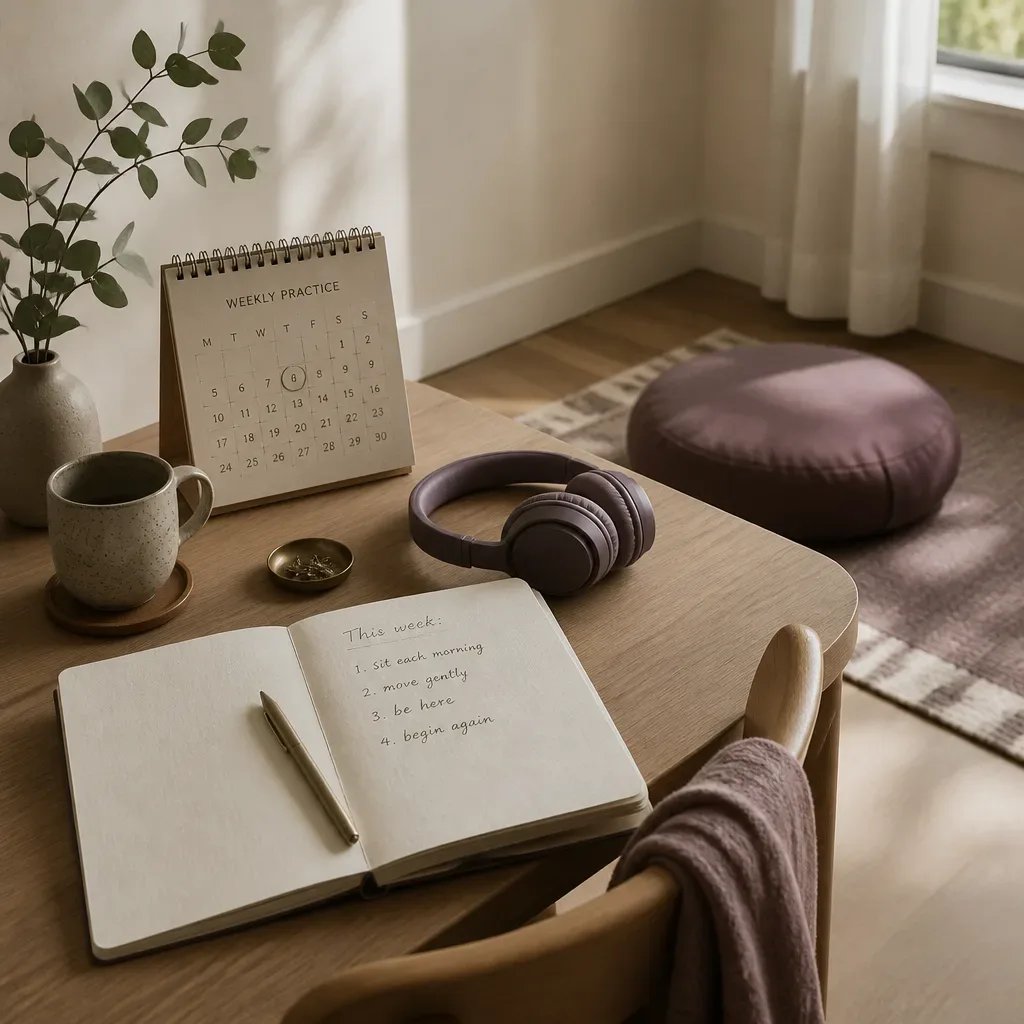
You might use Joe Dispenza meditation on Sunday morning, when the house is quiet and your phone is far from the bed. Then, on Monday through Saturday, you listen to your 3-minute future-self audio. This keeps the identity rehearsal alive without requiring retreat conditions every day. In behavior design, this is close to matching a high-effort practice with a low-effort anchor. Both have a place.
Here is a simple weekly rhythm:
- Choose one longer sit each week, 30 to 60 minutes, if your body welcomes it.
- Listen to your future-self audio daily, ideally at the same time.
- After listening, name one ordinary action that matches the audio.
- Use a written affirmation only as a small echo, not as the core practice.
- Review your Manifestation Board once or twice a week, then return to listening.
The action after the audio matters. Research on implementation intentions by Peter Gollwitzer, first developed in the 1990s, shows that specific if-then plans can improve follow-through. So after hearing your Dream-Self Moment, you might say, “If I open my laptop, I’ll send the honest email first.” Small. Real. Yours.
This also keeps manifestation from floating away from life. The Manifestation pillar holds the wider frame, but the practice is intimate: attention, repetition, action, return. You are not trying to force certainty. You are becoming familiar with a self you can actually inhabit.
If you want the cleanest distinction, keep this sentence: Joe Dispenza meditation is a longer state practice; future-self audio is a daily identity cue. One asks you to enter deeply. The other asks you to return often. Both can be useful. Neither has to be a performance.
The quiet test is tomorrow. When the room is ordinary and your mind is not special, what will you do? Press play, sit down, breathe, or begin again. That is where the practice tells the truth.
Stay close enough to hear yourself.