manifestation 101
Pillow Method Manifestation vs Dream-Self Audio
Pillow method manifestation and Dream-Self audio both work before sleep. See the quiet differences, best use cases, and how to choose a nightly practice.
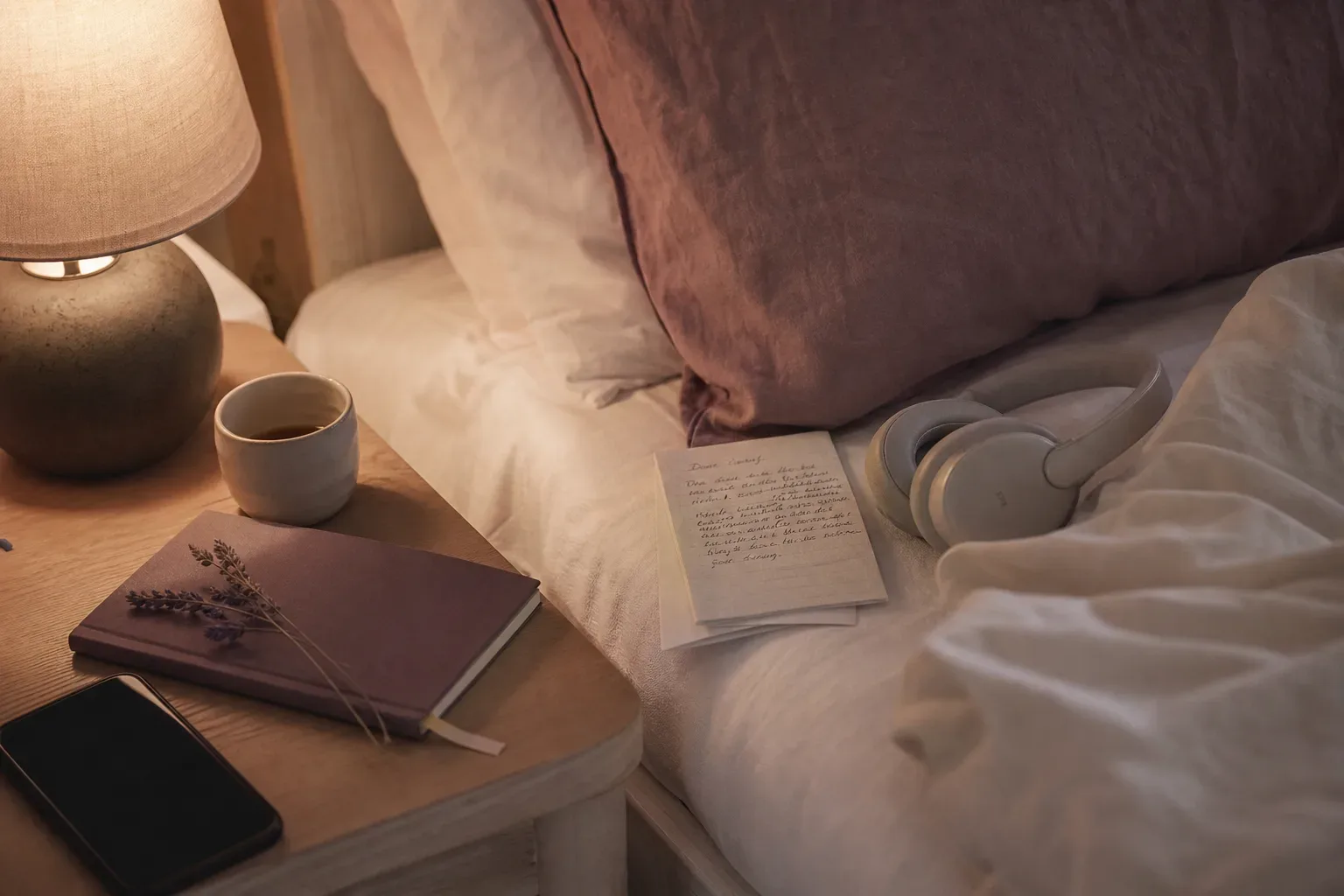
The paper is folded beside the bed. The headphones are already there. Pillow method manifestation uses a written intention placed under your pillow; Dream-Self audio uses a short personalized recording before sleep. Both give the mind a final image. Audio is often easier to repeat when you’re tired.
What is pillow method manifestation, really?
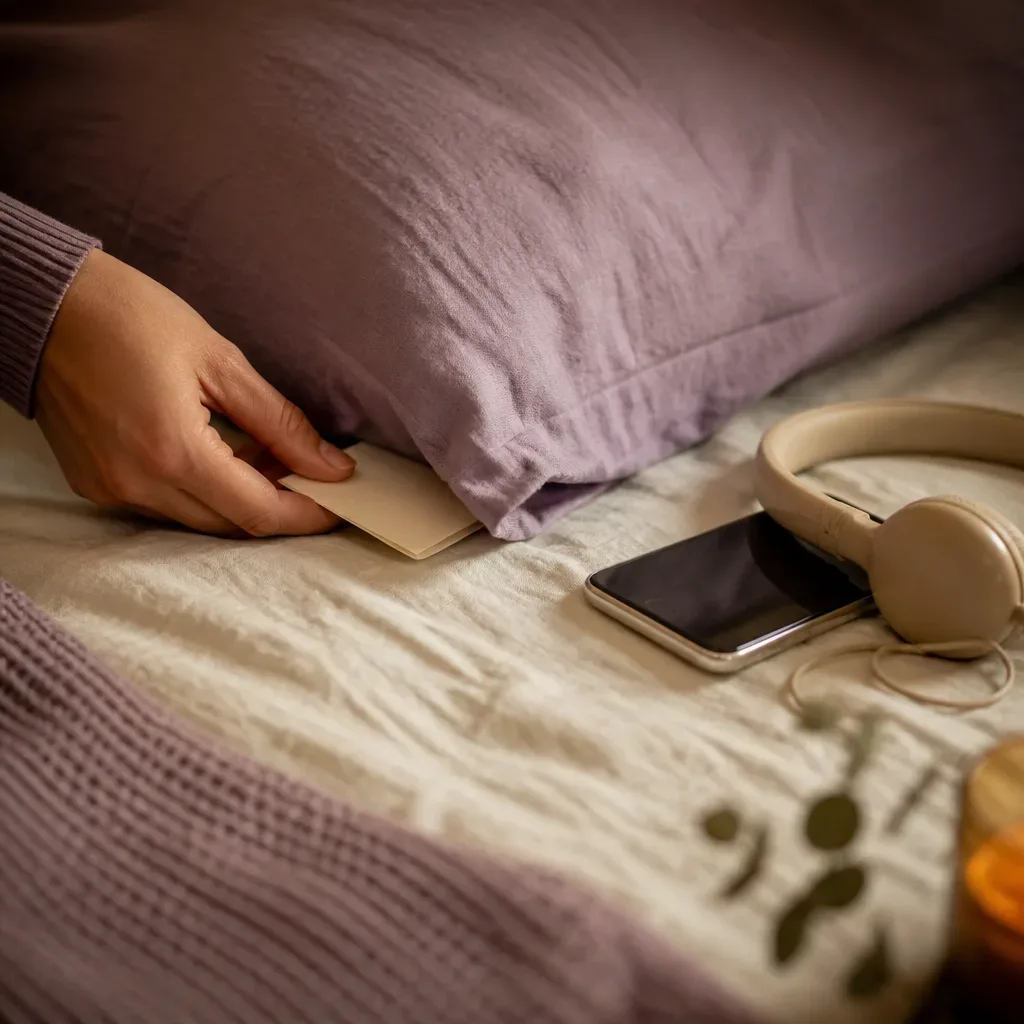
Pillow method manifestation is the practice of writing a desire or affirmation on paper and placing it under your pillow before sleep.
It is simple enough to explain in one breath. You write the thing you want to remember. You put it close to the place where you rest. Some people read it 3 times. Some write it 33 times. Some use a single sentence: I am safe in the work I love. The pillow becomes a small private archive. No one else needs to see it.
The method sits near older autosuggestion practices. Émile Coué, the French pharmacist often linked with early self-suggestion, taught a repeated phrase in the 1920s: Every day, in every way, I’m getting better and better. Neville Goddard later taught imaginal scenes before sleep, asking students to feel the wish fulfilled as they drifted. Those are not the same practice, but the family resemblance is clear: repetition, nearness to sleep, and a sentence that feels already true.
The strongest part of pillow method manifestation is not the paper. It is the narrowing. One page. One sentence. One night. A mind that has been carrying 42 browser tabs gets asked to hold only one. In a 2001 study, Laura King found that writing about a best possible self for 20 minutes across 4 days was associated with improved mood. That does not prove the pillow method. It does suggest that written future-self attention can matter.
If you try it, make it almost too plain:
- Write one sentence in present tense.
- Read it slowly once.
- Place it under your pillow.
- Let the sentence go.
- Repeat for 7 to 14 nights before changing it.
A ritual that needs drama usually won’t survive Tuesday.
For a wider frame on desire, attention, and repeated inner language, you can read the Manifestation pillar. It gives the larger map. The pillow method is one small room inside it.
What is Dream-Self audio before sleep?
Dream-Self audio before sleep is a short listening practice where you hear your future self described as already here.
The cleanest version inside Aya is the AYA Method: The AYA Method is a daily audio manifestation practice. Each day you listen to a short personalized recording — your Dream-Self Moment — narrated from the version of you who has already manifested the life you intend. Listening is the practice. Repetition is the work. The audio is the method.
This matters because audio lowers the effort. You do not have to find the sentence after a long day. You do not have to make your handwriting mean something. You press play. You listen. The practice meets the part of you that is already under the blanket and done making decisions.
Sleep-adjacent practices have a particular softness because the brain is already changing gears. Dr. Andrew Huberman has often described the value of deliberate rest states for learning and nervous system settling, and sleep research is clear that rest supports memory. A 2013 review in Physiological Reviews by Rasch and Born describes sleep as active in memory consolidation, not empty time. That does not make bedtime a magic machine. It makes it a tender moment for repetition.
Dream-Self audio also has one advantage writing often lacks: voice. A sentence on paper can stay flat if you don’t quite believe it. A narrated scene can carry pace, warmth, and detail. The voice keeps going when your own mind wanders. It can say the next line when you would have stopped.
The daily affirmation and Manifestation Board inside the app can support this, but they are not the center. The audio is the method. The affirmation is a small companion. The board is the visible reminder. The Dream-Self Moment is the nightly return.
Which practice is easier when your mind is tired?
Dream-Self audio is usually easier when your mind is tired because listening requires fewer decisions than writing.
This sounds unromantic. It is also where many practices live or die. At night, the difference between 1 step and 5 steps can be the whole story. If you have to find a pen, choose a sentence, wonder whether the sentence is good enough, fold the paper, and repeat it with feeling, you may simply stop. Not because you lack devotion. Because you’re human.
Behavior research keeps returning to this. In a 2010 meta-analysis of implementation intentions, Peter Gollwitzer and Paschal Sheeran reviewed 94 studies and found that specific if-then plans had a medium-to-large effect on goal achievement. The useful lesson is plain: remove the negotiation. If I get into bed, then I press play. That is easier than If I get into bed, then I invent the right sentence.
Here is the quiet comparison:
| Question | Pillow method manifestation | Dream-Self audio before sleep |
|---|---|---|
| Main action | Write and place a note | Listen to a recording |
| Effort level | Low to medium | Very low |
| Best for | People who like paper | People who like voice |
| Risk | Over-editing the sentence | Listening without attention |
| Repeatability | Good if kept simple | Strong if the audio is ready |
| Sensory cue | Touch and sight | Sound and rhythm |
The pillow method gives you contact. Paper has weight. It makes the wish visible. For some people, that is grounding. For others, the blank page becomes a small courtroom. The sentence gets judged before it gets used.
Audio is kinder to the almost-asleep self. It asks for presence, not performance. You can listen with your eyes closed. You can miss one line and return to the next. The practice does not collapse because your spelling was bad.
The practice you can keep while tired is often the practice that becomes real.
What happens in the mind with writing versus listening?
Writing externalizes the intention, while listening internalizes a guided scene through voice, rhythm, and repeated attention.
Writing has evidence behind it, though not always in the mystical way people claim. James Pennebaker’s expressive writing research often used 15 to 20 minutes of writing over several days and found links with improved wellbeing for some participants. The pillow method is much shorter than that. Still, the act of putting words outside the body can reduce blur. A written line says: this, not everything.
Listening works through a different doorway. Spoken language arrives in time. You cannot see the whole paragraph at once. You receive it line by line, which can be useful before sleep. The voice sets the pace for you. It can slow the nervous system by giving attention a single track to follow. In small mindfulness and relaxation studies, audio guidance is often used because it reduces the burden of self-directing the practice.
There is also belief to consider. In 2009, Joanne Wood and colleagues published research in Psychological Science showing that positive self-statements could make some people with low self-esteem feel worse. The sentence I am lovable may help one person and irritate another. This is why tone matters. Too large a claim can feel like a lie shouted across a room.
Dream-Self audio can soften that by using scene and identity rather than a bare command. Instead of forcing one line, it can let you hear a day in which the change has already become ordinary. You are not trying to bully the mind. You are giving it a place to rehearse.
For more on how spoken and written phrases behave, the Affirmations pillar is useful. Affirmations can be lovely. They can also be too shiny. The best ones feel like something your actual mouth could say at 10:47 p.m.
A true sentence doesn’t have to be loud to be believed.
Which one is better for manifestation before sleep?
For most people, Dream-Self audio is better for nightly repetition, while pillow method manifestation is better for people who need a physical symbol.
That is the practical answer. Not the grand one. Manifestation practices are often compared as if the most elaborate wins. But a practice wins by being done. A 2009 study by Phillippa Lally and colleagues at University College London found that habit automaticity took 66 days on average, with a range from 18 to 254 days. Any method that cannot survive ordinary evenings will not reach the part where repetition begins to teach you.
Pillow method manifestation is best when the paper feels like care. Some people need the hand to be involved. They need the pause, the fold, the placing under the pillow. The object says: I have chosen this. It can be especially helpful if your days are full of screens and you want one analog moment before sleep.
Dream-Self audio is best when your mind is busy or your evenings are thin. It works well if you already listen to audiobooks, meditations, prayers, or quiet lectures. You do not have to create the practice each night. You return to it. That return is not small. Repetition is how a future self stops sounding like a stranger.
There is no need to make enemies of the methods. The pillow method gives the wish a place. Dream-Self audio gives the wish a voice. If you want a broader comparison of techniques, the Manifestation pillar can help you place both without making either too precious.
People also ask whether timing matters astrologically. If that language is meaningful to you, Astrology and manifestation offers a quieter way to think about timing without giving your agency away to a calendar.
Can you combine pillow method manifestation with Dream-Self audio?
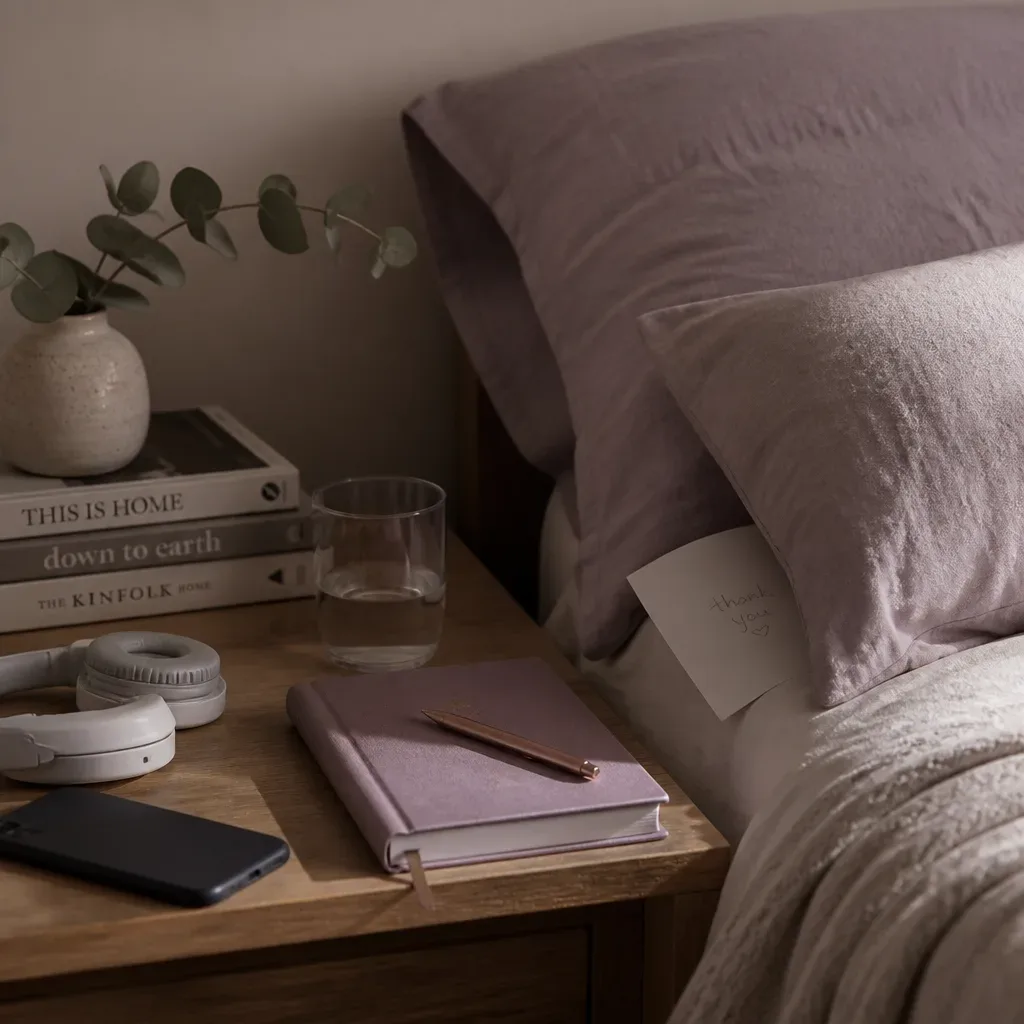
Yes, you can combine them, but the combined practice should stay shorter than 5 minutes.
The mistake is expansion. One sentence becomes 12. One audio becomes 3. Then you add candles, tracking, scripting, moon timing, breath counts, and a pen you can never find. The practice gets beautiful and then disappears. This is what I see at the library too: the ambitious books come back unread; the small ones come back worn.
A combined bedtime practice can be almost bare:
- Choose one desire for the next 14 nights.
- Write one present-tense line on paper.
- Place it under your pillow without rereading it 10 times.
- Listen to your Dream-Self Moment once.
- Sleep, or at least stop improving the ritual.
The 14-night frame is useful because it lowers panic. You are not choosing a sentence for the rest of your life. You are giving your mind 2 weeks of consistent contact. In clinical habit research, 2 weeks is early, but it is long enough to gather honest data: Did I resist it? Did it calm me? Did I remember who I meant to become?
If you already use a Manifestation Board, keep it out of the bed. Let it be a daytime visual cue. Before sleep, reduce the senses. Paper and audio are enough. The body understands enough faster than the mind does.
You can also pair the written sentence with an affirmation, but keep the hierarchy clear. In Aya, the daily affirmation supports the listening practice. It does not replace it. The audio carries the full scene. The line on paper is just a small door.
For a deeper explanation of how the audio works, return to the AYA Method. Read it in the afternoon, not while you’re trying to sleep.
Who should choose the pillow method, and who should choose audio?
Choose the method that fits your actual night, not the fantasy version of your night.
If you are a paper person, pillow method manifestation may feel like home. You like notebooks. You remember things better when you write them down. You enjoy the private oddness of a folded note under a pillow. A 2021 Pew Research Center report found that 23 percent of U.S. adults had not read a book in whole or in part in the previous year, which is a small reminder that text-based practices are not natural for everyone. If text is natural for you, use it.
If you are sound-led, choose Dream-Self audio. You remember voices. You relax when someone else holds the pace. You do not want another task at the end of the day. Audio is especially helpful when the barrier is not belief but fatigue. You are willing. You are just tired.
Use this plain guide:
- Choose pillow method manifestation if you want touch, handwriting, and a visible private symbol.
- Choose Dream-Self audio if you want ease, repetition, and a guided future-self scene.
- Combine them if you can keep the whole ritual under 5 minutes.
- Avoid both for a while if either one becomes a nightly test you keep failing.
- Change the sentence or audio if it makes your body tighten every time.
There is also the matter of temperament. Joe Dispenza often speaks about rehearsing a future self until it feels familiar. Neville Goddard spoke of living in the end, especially near sleep. You do not have to adopt every teaching around those names to notice the shared instruction: practice the state you want to recognize.
If manifestation is new to you, start with the smallest repeatable act. If affirmations are your doorway, read the Affirmations pillar. If you want the wider language first, use the Manifestation pillar. If timing and symbols help you stay tender with the practice, visit Astrology and manifestation.
The method is not proved by how much it asks of you. It is proved by whether you return.
Leave the note where it is. Press play. Let the room go quiet.