subliminals
How to Listen to Subliminals Without Losing Sleep
Learn how to listen to subliminals at night or during the day with safe timing, gentle volume, and a sleep-first routine that still feels true.
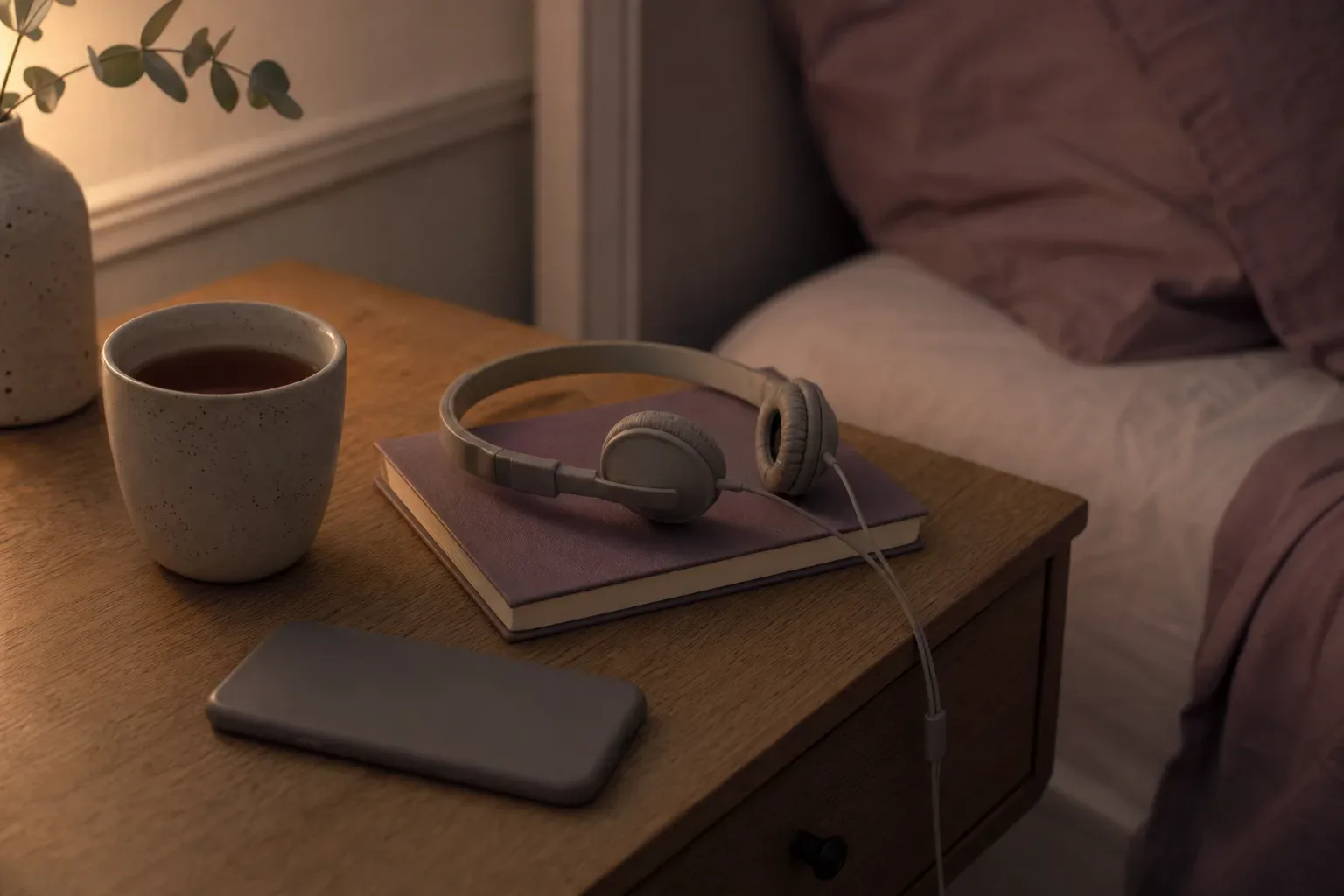
The kettle clicks off. Your room is already dark. To learn how to listen to subliminals without losing sleep, keep the sound low, keep the session short, use a timer, and treat sleep as the main practice. Ten careful minutes beats eight restless hours with audio running.
What is the sleep-first way to listen?
The sleep-first way is to listen before sleep, not through sleep, until you know your body stays quiet.
Start with a small rule. No new audio after the light is off. Subliminals can feel harmless because the words are softened or hidden, but the nervous system still hears sound. The American Academy of Sleep Medicine recommends adults get 7 or more hours of sleep on a regular basis. That number matters more than any track, any playlist, or any promise on a video title.
Use a 10 to 20 minute window. Put it before your usual wind-down, the way I’d place mint leaves in hot water and wait. Not forever. Long enough. In small studies of sleep hygiene, consistency tends to matter more than novelty, and most clinical advice begins with a steady bedtime and reduced stimulation. The practice should not ask your body to stay on duty all night.
Here is the simplest order:
- Choose one track for 7 nights.
- Listen 30 to 60 minutes before bed.
- Set the volume lower than you think you need.
- Stop the track with a timer.
- Write one line in the morning about sleep quality.
A practice that costs you sleep is too expensive.
This is also why I keep a difference between subliminals and the AYA Method. The AYA Method is a daily audio manifestation practice. Each day you listen to a short personalized recording — your Dream-Self Moment — narrated from the version of you who has already manifested the life you intend. Listening is the practice. Repetition is the work. The audio is the method.
AYA is heard clearly. Subliminals often are not. If you want more context for the larger practice, the manifestation pillar gives the clean foundation. For sleep, though, keep the first promise plain: your bed is for rest.
How low should the volume be?
The right volume is the softest level that lets the track be present without pulling your attention back to it.
Think of it as room sound, not a message you have to chase. If you can feel your jaw tightening to hear it, it’s too low in the wrong way. If the sound feels close to your face, it’s too loud. The World Health Organization has estimated that over 1 billion young people may be at risk of hearing loss from unsafe listening habits, mostly from personal audio devices and loud leisure settings. Bedtime should be the opposite of that.
A gentle rule is this: if someone spoke quietly from the doorway, you’d still hear them over the track. That means your ears aren’t being asked to work hard. It also means your mind is less likely to start monitoring every layer of sound. Dr. Andrew Huberman has often pointed to the importance of lowering arousal before sleep, including light and stimulation. Audio belongs in that same family. It can soothe. It can also keep you alert.
Use this table as a quiet check:
| Listening setup | Best use | Sleep risk | What to change |
|---|---|---|---|
| Phone speaker | Pre-bed listening | Low | Place it across the room |
| Pillow speaker | Short night session | Medium | Use a timer under 20 minutes |
| Earbuds | Daytime listening | Medium | Avoid if they press or tangle |
| Over-ear headphones | Seated practice | High in bed | Take them off before sleep |
| All-night playlist | Rarely needed | High | Replace with one timed track |
The quieter the practice, the more honest the data becomes. If you wake at 3:12 a.m. with a loop still playing, you don’t know whether the words helped. You only know your sleep was interrupted. One night can happen. Three nights is a pattern.
If you’re using spoken affirmations instead of hidden messages, the affirmations pillar may suit you better. Clear words can be used earlier in the evening, when your mind is still awake enough to consent to what it’s hearing.
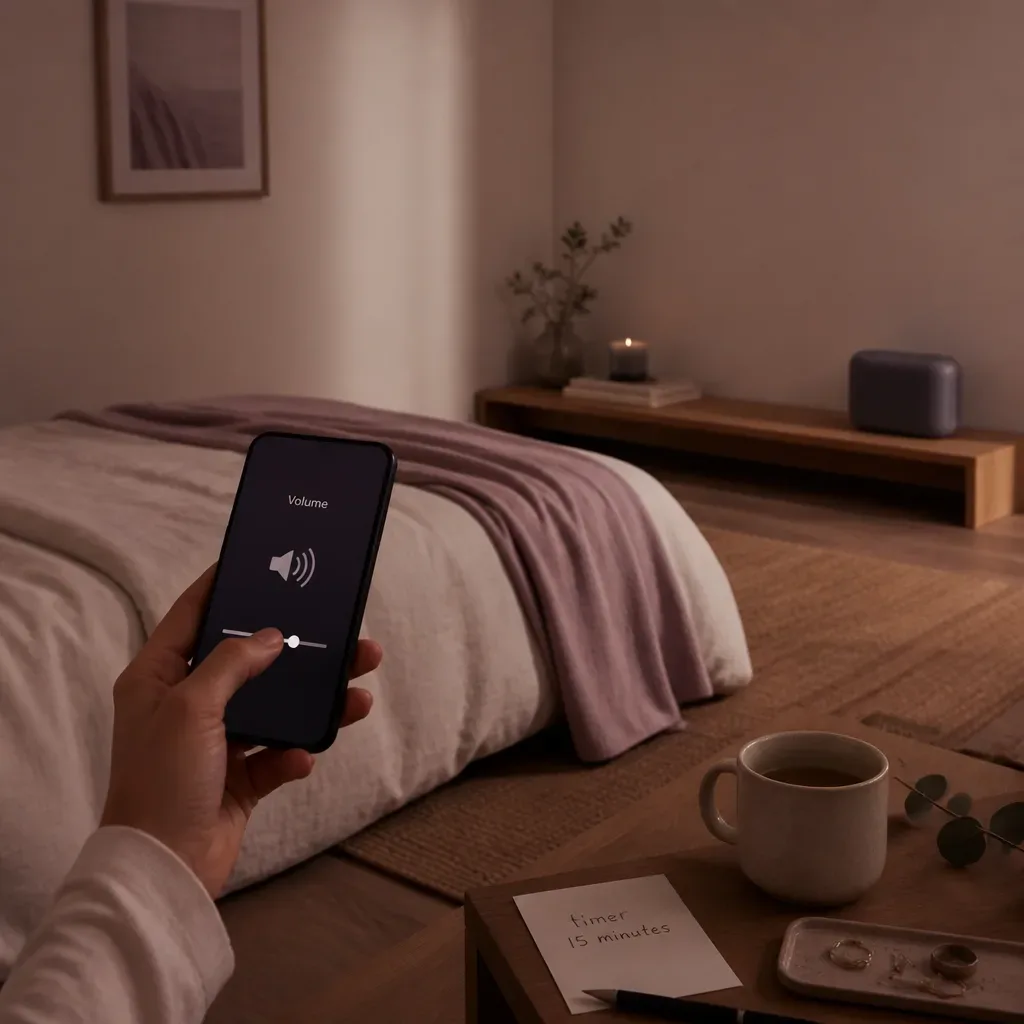
Should you listen at night or during the day?
Daytime listening is better if nighttime audio makes you alert, curious, or watchful.
Not every inner practice belongs near sleep. Some people hear a track and soften. Others begin testing it. Is it working. Did I choose the right one. Should I switch to another version. That mental checking is not rest. The National Sleep Foundation has long advised using the bed mainly for sleep and intimacy, because the brain learns by association. If bed becomes a place for evaluation, sleep can become shy.
Try a daytime window first. I like the hour when tea is cooling, before the day’s first hard task. You might use a lunch walk, a bus ride without scrolling, or the 15 minutes after work before you speak to anyone. Repetition doesn’t need drama. In behavioral research, small repeated cues are often easier to sustain than large new routines. A 2012 study in the British Journal of General Practice noted that simple habits can take weeks to become automatic, with wide variation between people.
Use night only if it passes three tests:
- You fall asleep at your usual time.
- You don’t wake more often than usual.
- You don’t feel duller in the morning.
- You don’t keep changing tracks after bed.
- You can stop for a night without feeling afraid.
Your body gives cleaner feedback than a comment section.
There is also the question of content. A subliminal for calm may sit differently than one aimed at money, beauty, study, or romance. Not because one category is magic and another is not. Because each topic can stir different thoughts. Pew Research Center has reported that about 31 percent of U.S. adults say they are online almost constantly. Many people already arrive at bed with a crowded mind. Don’t add a new argument there.
If your interest is tied to timing, symbols, or moon dates, keep that part playful and separate from sleep pressure. You can read astrology and manifestation earlier in the day, then let the night be simple.
What should you do before pressing play?
Before pressing play, remove the decisions that usually keep you awake.
Choose the track in daylight. Set the timer before you get into bed. Decide the volume while sitting up. Place the phone where you won’t reach for it. These are small things, but small things are where sleep is won. The CDC notes that about 1 in 3 U.S. adults report not getting enough sleep. That means your routine doesn’t need to be impressive. It needs to stop stealing minutes.
Here is my 20-minute version from the greenhouse, after the jars are labeled and the floor is swept:
- Minute 0 to 2: Put the phone on airplane mode if the track is downloaded.
- Minute 2 to 4: Set a 15-minute sleep timer.
- Minute 4 to 5: Lower the volume until the sound feels farther away.
- Minute 5 to 18: Listen without checking for results.
- Minute 18 to 20: Let the room be quiet before sleep.
You don’t need to believe harder at night. You need fewer interruptions.
If you use a manifestation board, keep it out of the bed itself. Look at it earlier, then put it down. In the AYA app, the daily affirmation and Manifestation Board are complements to the audio, not the center of the method. That order matters. The ear receives. The mind doesn’t have to manage every image at midnight.
A note on claims: research on commercial subliminal self-help tapes has been mixed for decades. In a 1991 Psychological Science study by Greenwald, Spangenberg, Pratkanis, and Eskenazi, people reported improvement even when tapes were mislabeled, which pointed toward expectancy rather than hidden content. That doesn’t mean your ritual is worthless. It means you should be honest about what is helping: the words, the pause, the repetition, the care.
If you want a broader primer, keep a separate reading window for subliminal audio basics. Reading in bed can become another form of searching.
How do you know if subliminals are hurting your sleep?
Subliminals are hurting your sleep if your nights become lighter, shorter, or more anxious after you start.
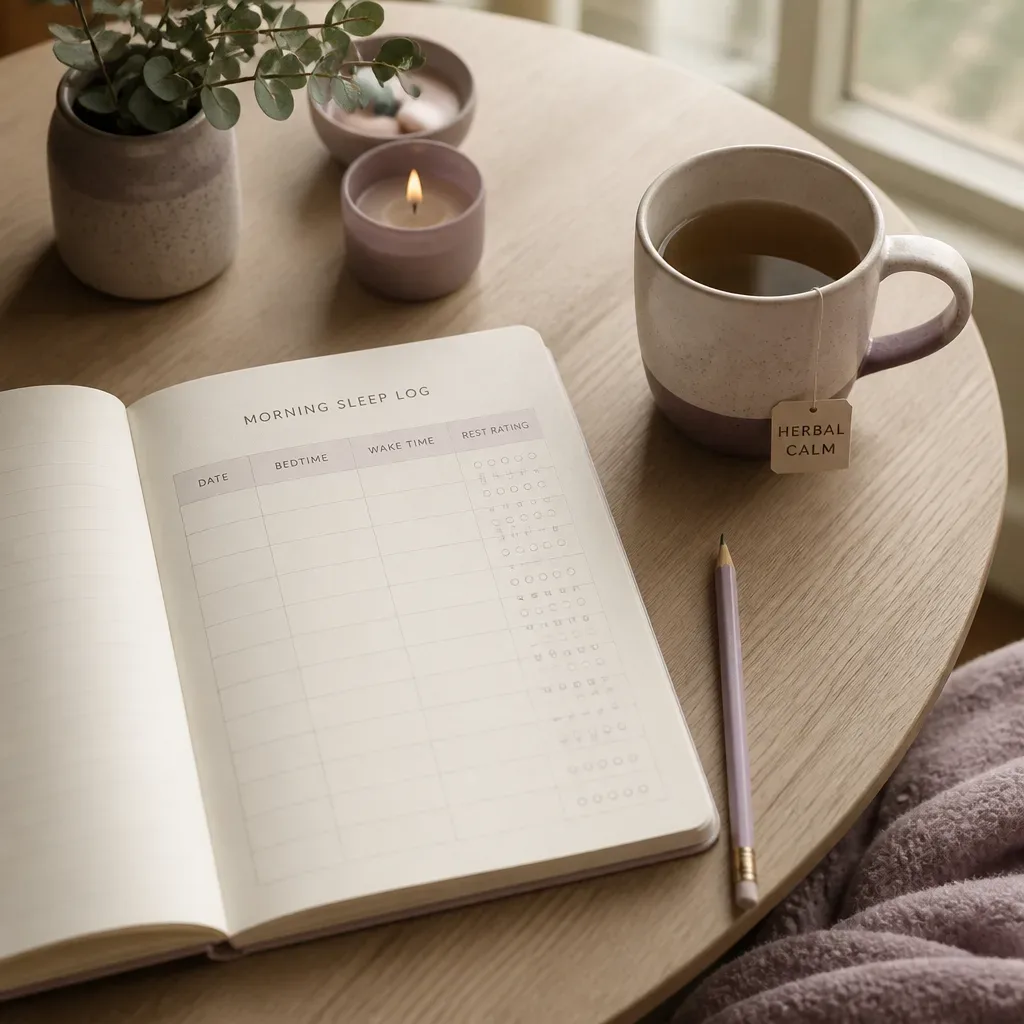
Don’t diagnose the whole self. Watch the pattern. For 7 days, track four numbers: bedtime, estimated sleep onset, wake time, and how rested you feel from 1 to 5. Sleep medicine often uses diaries because memory gets slippery after a poor night. A simple log is not perfect, but it’s better than guessing from mood alone.
Use this small scorecard:
| Sign in the morning | What it may mean | What to do tonight |
|---|---|---|
| You woke with earbuds in | Setup is disturbing sleep | Use a speaker or stop at bedtime |
| You remember the track restarting | Audio is too present | Shorten the timer |
| You feel tense about results | Practice has become pressure | Take one night off |
| You slept normally | Routine may be fine | Keep it unchanged for 7 days |
| You feel less rested twice | Sleep is asking for quiet | Move listening to daytime |
One bad night is weather. A repeated bad night is information.
Be especially careful if you have insomnia, tinnitus, migraines, trauma symptoms, or a job that requires high alertness. The American Academy of Sleep Medicine treats chronic insomnia as sleep difficulty at least 3 nights per week for at least 3 months, with daytime impairment. If you’re near that territory, don’t make your bed a laboratory. Speak with a qualified clinician, and keep audio practices outside the sleep window.
The same care applies to children and teens. The American Academy of Pediatrics has raised concerns about media use displacing sleep in adolescents. If a younger person is using subliminals all night, the first intervention is not a better playlist. It’s a steadier bedtime, less device access, and an adult who listens without mocking them.
There is no shame in stopping. A ritual is allowed to be beautiful and still not belong at midnight.
What routine can you follow for the next 7 nights?
Follow a 7-night test that changes only one thing at a time.
Night 1 is not for judging. It’s for setting a baseline. Listen for 10 minutes, stop the audio, and sleep in silence. Night 2, do the same. By Night 3, you’ll usually know whether the track makes you calm or watchful. In habit research, repetition under stable conditions is one of the main ways behavior becomes easier. But stable means stable. Don’t change the track, volume, device, and timing all at once.
Here is the quiet plan:
- Nights 1 and 2: Listen 45 minutes before bed for 10 minutes.
- Nights 3 and 4: Keep the same track and try 15 minutes.
- Night 5: If sleep is steady, keep going. If not, move the track to daytime.
- Night 6: Add one minute of silence after the track.
- Night 7: Read your notes before noon, not at bedtime.
The review belongs to morning. The surrender belongs to night.
If you’re pairing subliminals with a clearer manifestation practice, keep them in separate chairs. The AYA Method uses a Dream-Self Moment you can hear and return to daily. Subliminals are background by design. One is a spoken meeting with the self you’re becoming. The other is a softened suggestion. You don’t have to force them into the same hour.
For many people, a simple rhythm works best: AYA in the morning, subliminals before dinner or during a walk, sleep in quiet. If you like visible cues, a board can stay on the wall and still not come to bed with you. You can read more about gentle visual practice through manifestation boards, then decide what belongs in daylight.
After 7 nights, choose the result your sleep supports. Keep it, shorten it, move it earlier, or let it go. No audio is more important than waking with your own life still soft in your hands.
The room can be quiet now.